22-Nov-08
 
Total resep
3 0 15
resep masakan
LOGIN PAGE REGISTER PAGE
VIDEO KULINER
Healthy Cooking: White Bean Crostini
diet.com for thousands of other low calories delicious healthy recipes
Cooking Collard Greens
com Dave is cooking Collard Greens with onions, garlic, ham, chicken b
Cooking Cheeseburger
Dave is cooking cheeseburgers!! ... cooking cook cheeseburger burger h
  • 1
  • 2
  • 3
  • 4
  • 5
  • 6
Shallot
General Description: The shallot (Allium ascalonicum or Allium cepa, Aggregatum group) is a small member of the onion family. Shallots probably originated in Asia, traveling from there to India and the eastern Mediterranean. The name “shallot” comes from Ashkelon, a city of ancient Israel, where people in classical Greek times believed shallots originated.

Shallots are formed like garlic with a head composed of multiple cloves. Their skin color can vary from golden brown to gray to rose red, and their off-white flesh is usually tinged with green or magenta. Shallots are much favored by chefs because of their firm texture and sweet, aromatic, yet pungent, flavor.

The two main types are the large Jersey shallot (from the Isle of Jersey) and the more subtly flavored “true” or gray French shallot. Jersey shallots of either the long or half-long type are the most common in American markets. Cuisse de poulet are French shallots shaped like a chicken thigh with deep gold skins. Dutch shallots are more rounded with either yellow or coppery red skin. Asian markets usually carry plentiful stocks of relatively inexpensive shallots that are smaller and stronger than European types. In France, Belgium, and the Netherlands, markets overflow with all colors and sizes of shallots. More shallots are grown in Southeast Asia than anywhere else in the world.

Season: Fresh green shallots are sometimes available in the spring, but dry shallots are available year-round.

Purchase: Choose large, plump, firm, well-shaped shallots that are not sprouting.

Avoid: Shallots that are wrinkled or sprouting or that show any signs of black mold should not be purchased.

Storage: Store shallots in a cool, dry, well-ventilated place for up to 1 month.

Preparation:

Note: Shallots are usually diced into small pieces for use as an aromatic in various dishes.

1. Peel the skin with a paring knife, leaving the root end attached. #Cut in half, then set the shallot, cut side down, on a work surface.
2. Make horizontal cuts toward the root.
3. Cut crosswise into pieces of desired fineness.

Serving Suggestions: Slice shallots thinly and brown in butter with a little chopped thyme till deeply caramelized, then serve as a topping for grilled chicken, calf’s liver, or hamburgers. Use as the base for gravy. Make creamy shallot vinaigrette by blending chopped shallots with olive oil, red wine or sherry vinegar, and a little mustard.

Flavor Affinities: Beef, beets, Brussels sprouts, butter, chervil, chicken, chives, cream, duck, fish, lentils, potatoes, tarragon, thyme, turkey, veal, white beans, wine.
Food
Food is any substance, usually composed primarily of carbohydrates, fats, water and/or proteins, that can be eaten or drunk by an animal or human for nutrition or pleasure. Items considered food may be sourced from plants, animals or other categories such as fungus or fermented products like alcohol. Although many human cultures sought food items through hunting and gathering, today most cultures use farming, ranching, and fishing, with hunting, foraging and other methods of a local nature included but playing a minor role.

Most traditions have a recognizable cuisine, a specific set of cooking traditions, preferences, and practices, the study of which is known as gastronomy. Many cultures have diversified their foods by means of preparation, cooking methods and manufacturing. This also includes a complex food trade which helps the cultures to economically survive by-way-of food, not just by consumption.

Many cultures study the dietary analysis of food habits. While humans are omnivores, religion and social constructs such as morality often affect which foods they will consume. Food safety is also a concern with foodborne illness claiming many lives each year. In many languages, food is often used metaphorically or figuratively, as in "food for thought".

Food sources

Almost all foods are of plant or animal origin, although there are some exceptions. Foods not coming from animal or plant sources include various edible fungi, such mushrooms. Fungi and ambient bacteria are used in the preparation of fermented and pickled foods such as leavened bread, alcoholic drinks, cheese, pickles, and yogurt. Many cultures eat seaweed, a protist, or blue-green algae (cyanobacteria) such as Spirulina.[1] Additionally, salt is often eaten as a flavoring or preservative, and baking soda is used in food preparation. Both of these are inorganic substances, as is water, an important part of human diet.

Plants
any plants or plant parts are eaten as food. There are around 2,000 plant species which are cultivated for food, and many have several distinct cultivars.[2]

Seeds of plants are a good source of food for animals, including humans because they contain nutrients necessary for the plant's initial growth. In fact, the majority of food consumed by human beings are seed-based foods. Edible seeds include cereals (such as maize, wheat, and rice), legumes (such as beans, peas, and lentils), and nuts. Oilseeds are often pressed to produce rich oils, such as sunflower, rape (including canola oil), and sesame.[3] One of the earliest food recipes made from ground chickpeas is called hummus, which can be traced back to Ancient Egypt times.

Fruits are the ripened ovaries of plants, including the seeds within. Many plants have evolved fruits that are attractive as a food source to animals, so that animals will eat the fruits and excrete the seeds some distance away. Fruits, therefore, make up a significant part of the diets of most cultures. Some botanical fruits, such as tomatoes, pumpkins and eggplants, are eaten as vegetables.[4] (For more information, see list of fruits.)

Vegetables are a second type of plant matter that is commonly eaten as food. These include root vegetables (such as potatoes and carrots), leaf vegetables (such as spinach and lettuce), stem vegetables (such as bamboo shoots and asparagus), and inflorescence vegetables (such as globe artichokes and broccoli). Many herbs and spices are highly-flavorful vegetables.[5]

Animal source foods

Animals can be used as food either directly, or indirectly by the products they produce. Meat is an example of a direct product taken from an animal, which comes from either muscle systems or from organs. Food products produced by animals include milk produced by mammals, which in many cultures is drunk or processed into dairy products such as cheese or butter. In addition birds and other animals lay eggs, which are often eaten, and bees produce honey, a popular sweetener in many cultures. Some cultures consume blood, some in the form of blood sausage, as a thickener for sauces, a cured salted form for times of food scarcity, and others use blood in stews such as civet.[6]

Production
Tractor and Chaser Bin

Main article: Agriculture

Food is traditionally obtained through farming, ranching, and fishing, with hunting, foraging and other methods of subsistence locally important. More recently, there has been a growing trend towards more sustainable agricultural practices. This approach, which is partly fueled by consumer demand, encourages biodiversity, local self-reliance and organic farming methods.[7] Major influences on food production are international organizations, (e.g. the World Trade Organization and Common Agricultural Policy), national government policy (or law), and war.[8]

Preparation

While some food can be eaten raw, many foods undergo some form of preparation for reasons of safety, palatability, or flavor. At the simplest level this may involve washing, cutting, trimming or adding other foods or ingredients, such as spices. It may also involve mixing, heating or cooling, pressure cooking, fermentation, or combination with other food. In a home, most food preparation takes place in a kitchen. Some preparation is done to enhance the taste or aesthetic appeal; other preparation may help to preserve the food; and others may be involved in cultural identity. A meal is made up of food which is prepared to be eaten at a specific time and place.[9]

Animal slaughter and butchering
Workers and cattle in a slaughterhouse.

The preparation of animal-based food will usually involve slaughter, evisceration, hanging, portioning and rendering. In developed countries, this is usually done outside the home in slaughterhouses which are used to process animals en mass for meat production. Many countries regulate their slaughterhouses by law. For example the United States has established the Humane Slaughter Act of 1958, which requires that an animal be stunned before killing. This act, like those in many countries, exempts slaughter in accordance to religious law, such as kosher shechita and dhabiĥa halal. Strict interpretations of kashrut require the animal to be fully aware when its carotid artery is cut.[10]

On the local level a butcher may commonly break down larger animal meat into smaller manageable cuts and pre-wrapped for commercial sale or wrapped to order in butcher paper. In addition fish and seafood may be fabricated into smaller cuts by a fish monger at the local level. However fish butchery may be done on board a fishing vessel and quick-frozen for preservation of quality.[11]

Cooking

Main article: Cooking

Cooking with a Wok in China

The term "cooking" encompasses a vast range of methods, tools and combinations of ingredients to improve the flavor or digestibility of food. Cooking technique, known as culinary art, generally requires the selection, measurement and combining of ingredients in an ordered procedure in an effort to achieve the desired result. Constraints on success include the variability of ingredients, ambient conditions, tools, and the skill of the individual cooking.[12] The diversity of cooking worldwide is a reflection of the myriad nutritional, aesthetic, agricultural, economic, cultural and religious considerations that impact upon it.[13]

Cooking requires applying heat to a food which usually, though not always, chemically transforms it, thus changing its flavor, texture, appearance, and nutritional properties.[14] Cooking proper, as opposed to roasting, requires the boiling of water in a container, and was practiced at least since the 10th millennium BC with the introduction of pottery.[15] There is archaeological evidence of roasted foodstuffs at Homo erectus campsites dating from 420,000 years ago.[16]

Cooking equipment and methods

There are many types of cooking equipment used for cooking. Ovens are one type of cooking equipment which can be used for baking or roasting and offer a dry-heat cooking method. Different cuisines will use different types of ovens, for example Indian culture uses a Tandoor oven is a cylindrical clay oven which operates at a single high temperature,[17] while western kitchens will use variable temperature convection ovens, conventional ovens, toaster ovens in addition to non-radiant heat ovens like the microwave oven. Ovens may be wood-fired, coal-fired, gas, electric, or oil-fired.[18]
A stainless steel frying pan.

Various types of cook-tops are used as well. They carry the same variations of fuel types as the ovens mentioned above. cook-tops are used to heat vessels placed on top of the heat source, such as a sauté pan, sauce pot, frying pan, pressure cooker, etc. These pieces of equipment can use either a moist or dry cooking method and include methods such as steaming, simmering, boiling, and poaching for moist methods; while the dry methods include sautéing, pan frying, or deep-frying.[19]
Traditional asado
Traditional asado

In addition, many cultures use grills for cooking. A grill operates with a radiant heat source from below, usually covered with a metal grid and sometimes a cover. An open bit barbecue in the American south is one example along with the American style outdoor grill fueled by wood, liquid propane or charcoal along with soaked wood chips for smoking.[20] A Mexican style of barbecue is called barbacoa, which involves the cooking of meats and whole sheep over open fire. In Argentina, asado is prepared on a grill held over an open pit or fire made upon the ground, on which a whole animal is grilled or in other cases smaller cuts of the animal.[21]

Raw food
Many types of sushi ready to be eaten.

Certain cultures highlight animal and vegetable foods in their raw state. Sushi in Japan is one such cuisine that features raw sliced fish, either in sashimi, nigiri, or maki styles.[22] Steak tartare and salmon tartare are dishes made from diced or ground raw beef or salmon respectively, mixed with various ingredients and served with baguette, brioche or frites.[23] In Italy, carpaccio is a dish of very thin sliced raw beef, drizzled with a vinaigrette made with olive oil.[24] A popular health food movement known as raw foodism promotes a mostly vegan diet of raw fruits, vegetables and grains prepared in various ways, including juicing, food dehydration, not passing the 118 degree mark, and sprouting.[25]

Restaurants
Tom's Restaurant, a restaurant in New York

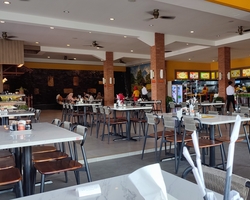
Many cultures produce food for sale in restaurants for paying customers. These restaurants often have trained chefs who prepare the food, while trained waitstaff serve the customers. The term restaurant is credited to the French from the 19th century, as it relates to the restorative nature of the bouillons that were once served in them. However, the concept pre-dates the naming of these establishments, as evidence suggests commercial food preparation may have existed during the age of the city of Pompeii, as well as an urban sales of prepared foods in China during the Song Dynasty. The coffee shops or cafes of 17th century Europe may also be considered an early version of the restaurant.[26] In 2005 the United States spent $496 billion annually for out-of-home dining. Expenditures by type of out-of-home dining was as follows, 40% in full-service restaurants, 37.2% in limited service restaurants (fast food), 6.6% in schools or colleges, 5.4% in bars and vending machines, 4.7% in hotels and motels, 4.0% in recreational places, and 2.2% in other which includes military bases.[27]

Food manufacture
Packaged household food items

Main article: Food manufacture

Packaged foods are manufactured outside the home for purchase. This can be as simple as a butcher preparing meat, or as complex as a modern international food industry. Early food processing techniques were limited by available food preservation, packaging and transportation. This mainly involved salting, curing, curdling, drying, pickling, fermentation and smoking.[28] During the industrialization era in the 19th century, food manufacturing arose.[29] This development took advantage of new mass markets and emerging new technology, such as milling, preservation, packaging and labeling and transportation. It brought the advantages of pre-prepared time saving food to the bulk of ordinary people who did not employ domestic servants.[30]

At the start of the 21st century, a two-tier structure has arisen, with a few international food processing giants controlling a wide range of well-known food brands. There also exists a wide array of small local or national food processing companies.[31] Advanced technologies have also come to change food manufacture. Computer-based control systems, sophisticated processing and packaging methods, and logistics and distribution advances, can enhance product quality, improve food safety, and reduce costs.[30]

Commercial trade

International exports and imports
Food imports in 2005

World Bank reported that the EU was the top food importer in 2005 followed at a distance by the USA and Japan. Food is now traded and marketed on a global basis. The variety and availability of food is no longer restricted by the diversity of locally grown food or the limitations of the local growing season.[32] Between 1961 and 1999 there has been a 400% increase in worldwide food exports.[33] Some countries are now economically dependent on food exports, which in some cases account for over 80% of all exports.[34]

In 1994 over 100 countries became signatories to the Uruguay Round of the General Agreement on Tariffs and Trade in a dramatic increase in trade liberalization. This included an agreement to reduce subsidies paid to farmers, underpinned by the WTO enforcement of agricultural subsidy, tariffs, import quotas and settlement of trade disputes that cannot be bilaterally resolved.[35] Where trade barriers are raised on the disputed grounds of public health and safety, the WTO refer the dispute to the Codex Alimentarius Commission, which was founded in 1962 by the United Nations Food and Agriculture Organization and the World Health Organization. Trade liberalization has greatly affected world food trade.[36]

Marketing and retailing
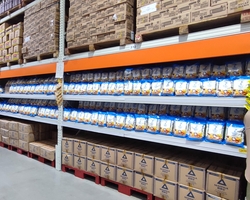
Packaged food aisles of supermarket in Portland, Oregon

Food marketing brings together the producer and the consumer. It is the chain of activities that brings food from "farm gate to plate."[37] The marketing of even a single food product can be a complicated process involving many producers and companies. For example, fifty-six companies are involved in making one can of chicken noodle soup. These businesses include not only chicken and vegetable processors but also the companies that transport the ingredients and those who print labels and manufacture cans.[38] The food marketing system is the largest direct and indirect non-government employer in the United States.

In the pre-modern era, the sale of surplus food took place once a week when farmers took their wares on market day, into the local village market place. Here food was sold to grocers for sale in their local shops for purchase by local consumers.[13][30] With the onset of industrialization, and the development of the food processing industry, a wider range of food could be sold and distributed in distant locations. Typically early grocery shops would be counter-based shops, in which purchasers told the shop-keeper what they wanted, so that the shop-keeper could get it for them.[13][39]

In the 20th century supermarkets were born. Supermarkets brought with them a self service approach to shopping using shopping carts, and were able to offer quality food at lower cost through economies of scale and reduced staffing costs. In the latter part of the 20th century, this has been further revolutionized by the development of vast warehouse-sized out-of-town supermarkets, selling a wide range of food from around the world.[40]

Unlike food processors, food retailing is a two-tier market in which a small number of very large companies control a large proportion of supermarkets. The supermarket giants wield great purchasing power over farmers and processors, and strong influence over consumers. Nevertheless, less than ten percent of consumer spending on food goes to farmers, with larger percentages going to advertising, transportation, and intermediate corporations.[41]

Prices

Consumers worldwide faced rising food prices, it was reported on March 24, 2008. Reasons for this development are freak weather, dramatic changes in the global economy, including higher oil prices, lower food reserves and growing consumer demand in China and India. In the long term, prices are expected to stabilize. Farmers will grow more grain for both fuel and food and eventually bring prices down. Already this is happening with wheat, with more crops to be planted in the United States, Canada and Europe in 2009. However, the Food and Agriculture Organization projects that consumers still face at least until 2018 more expensive food. It is rare that the spikes are hitting all major foods in most countries at once. Food prices rose 4 percent in the United States 2007, the highest rise since 1990, and are expected to climb as much again 2008. As of December 2007, 37 countries faced food crises, and 20 had imposed some sort of food-price controls. In China, the price of pork has jumped 58 percent in 2007. In the 1990s and 1980s, farm subsidies and support programs allowed major grain exporting countries to hold large surpluses, which could be tapped during food shortages to keep prices down. But new trade policies have made agricultural production much more responsive to market demands -- putting global food reserves at their lowest since 1983.[42]

Food prices are rising, wealthier Asian consumers are westernizing their diets, and farmers and nations of the third world are struggling to keep up the pace. The past five years have seen rapid growth in the contribution of Asian nations to the Global Fluid and Powdered Milk Manufacturing industry, which in 2008 accounts for more than 30% of production, while China alone accounts for more than 10% of both production and consumption in the Global Fruit and Vegetable Processing and Preserving industry. The trend is similarly evident in industries such as Soft Drink and Bottled Water Manufacturing, as well as Global Cocoa, Chocolate and sugar Confectionery Manufacturing, forecast to grow by 5.7% and 10.0% respectively during 2008 in response to soaring demand in China and Southeast Asian markets [43].

Famine and hunger
Italian €2 commemorative coin of 2004 celebrating the World Food Programme

Food deprivation leads to malnutrition and ultimately starvation. This is often connected with famine, which involves the absence of food in entire communities. This can have a devastating and widespread effect on human health and mortality. Rationing is sometimes used to distribute food in times of shortage, most notably during times of war.[8]

Starvation is a significant international problem. Approximately 815 million people are undernourished, and over 16,000 children die per day from hunger-related causes.[44] Food deprivation is regarded as a deficit need in Maslow's hierarchy of needs and is measured using famine scales.[45]

Food aid

Food aid can benefit people suffering from a shortage of food. It can be used to improve peoples' lives in the short term, so that a society can increase its standard of living to the point that food aid is no longer required.[46] Conversely, badly managed food aid can create problems by disrupting local markets, depressing crop prices, and discouraging food production. Sometimes a cycle of food aid dependence can develop.[47] Its provision, or threatened withdrawal, is sometimes used as a political tool to influence the policies of the destination country, a strategy known as food politics. Sometimes, food aid provisions will require certain types of food be purchased from certain sellers, and food aid can be misused to enhance the markets of donor countries.[48] International efforts to distribute food to the neediest countries are often co-ordinated by the World Food Programme.[49]

Safety

Salmonella bacteria is a common cause of foodborne illness, particularly in undercooked chicken and chicken eggs

Foodborne illness, commonly called "food poisoning," is caused by bacteria, toxins, viruses, parasites, and prions. Roughly 7 million people die of food poisoning each year, with about 10 times as many suffering from a non-fatal version.[50] The two most common factors leading to cases of bacterial foodborne illness are cross-contamination of ready-to-eat food from other uncooked foods and improper temperature control. Less commonly, acute adverse reactions can also occur if chemical contamination of food occurs, for example from improper storage, or use of non-food grade soaps and disinfectants. Food can also be adulterated by a very wide range of articles (known as 'foreign bodies') during farming, manufacture, cooking, packaging, distribution or sale. These foreign bodies can include pests or their droppings, hairs, cigarette butts, wood chips, and all manner of other contaminants. It is possible for certain types of food to become contaminated if stored or presented in an unsafe container, such as a ceramic pot with lead-based glaze.[50]
Hazard Analysis and Critical Control Points (HACCP) Flowchart

Food poisoning has been recognized as a disease of man since as early as Hippocrates.[51] The sale of rancid, contaminated or adulterated food was commonplace until introduction of hygiene, refrigeration, and vermin controls in the 19th century. Discovery of techniques for killing bacteria using heat and other microbiological studies by scientists such as Louis Pasteur contributed to the modern sanitation standards that are ubiquitous in developed nations today. This was further underpinned by the work of Justus von Liebig, which led to the development of modern food storage and food preservation methods.[52] In more recent years, a greater understanding of the causes of food-borne illnesses has led to the development of more systematic approaches such as the Hazard Analysis and Critical Control Points (HACCP), which can identify and eliminate many risks.[53]

Allergies

Main article: food allergy

Some people have allergies or sensitivities to foods which are not problematic to most people. This occurs when a person's immune system mistakes a certain food protein for a harmful foreign agent and attacks it. About 2% of adults and 8% of children have a food allergy.[54] The amount of the food substance required to provoke a reaction in a particularly susceptible individual can be quite small. In some instances, traces of food in the air, too minute to be perceived through smell, have been known to provoke lethal reactions in extremely sensitive individuals. Common food allergens are gluten, corn, shellfish (mollusks), peanuts, and soy.[54] Allergens frequently produce symptoms such as diarrhea, rashes, bloating, vomiting, and regurgitation. The digestive complaints usually develop within half an hour of ingesting the allergen.[54]

Rarely, food allergies can lead to a medical emergency, such as anaphylactic shock, hypotension (low blood pressure), and loss of consciousness. An allergen associated with this type of reaction is peanut, although latex products can induce similar reactions.[54] Initial treatment is with epinephrine (adrenaline), often carried by known patients in the form of an Epi-pen.[55]

Diet
A package of halal-certified frozen food (steamed cabbage buns) from Jiangsu province, China

Main article: Diet (nutrition)

Cultural and religious diets

Dietary habits are the habitual decisions a person or culture makes when choosing what foods to eat.[56] Although humans are omnivores, many cultures hold some food preferences and some food taboos. Dietary choices can also define cultures and play a role in religion. For example, only kosher foods are permitted by Judaism, and halal/haram foods by Islam, in the diet of believers.[57] In addition, the dietary choices of different countries or regions have different characteristics. This is highly related to a culture's cuisine.
Children in this photograph from a Nigerian orphanage show symptoms of malnutrition, with four illustrating the gray-blond hair symptomatic of kwashiorkor.

Diet deficiencies

Dietary habits play a significant role in the health and mortality of all humans. Imbalances between the consumed fuels and expended energy results in either starvation or excessive reserves of adipose tissue, known as body fat.[58] Poor intake of various vitamins and minerals can lead to diseases which can have far-reaching effects on health. For instance, 30% of the world's population either has, or is at risk for developing, Iodine deficiency.[59] It is estimated that at least 3 million children are blind due to vitamin A deficiency.[60] Vitamin C deficiency results in scurvy.[61] Calcium, Vitamin D and phosphorus are inter-related; the consumption of each may affect the absorption of the others. Kwashiorkor and marasmus are childhood disorders caused by lack of dietary protein.[62]

Moral, ethical, and health conscious diet

Many individuals limit what foods they eat for reasons of morality, or other habit. For instance vegetarians choose to forgo food from animal sources to varying degrees. Others choose a healthier diet, avoiding sugars or animal fats and increasing consumption of dietary fiber and antioxidants.[63] Obesity, a serious problem in the western world, leads to higher chances of developing heart disease, diabetes, and many other diseases.[64] More recently, dietary habits have been influenced by the concerns that some people have about possible impacts on health or the environment from genetically modified food.[65] Further concerns about the impact of industrial farming (grains) on animal welfare, human health and the environment are also having an effect on contemporary human dietary habits. This has led to the emergence of a counterculture with a preference for organic and local food.[66]

Nutrition
USDA Food Pyramid
USDA Food Pyramid

Between the extremes of optimal health and death from starvation or malnutrition, there is an array of disease states that can be caused or alleviated by changes in diet. Deficiencies, excesses and imbalances in diet can produce negative impacts on health, which may lead to diseases such as scurvy, obesity or osteoporosis, as well as psychological and behavioral problems. The science of nutrition attempts to understand how and why specific dietary aspects influence health.

Nutrients in food are grouped into several categories. Macronutrients means fat, protein, and carbohydrates. Micronutrients are the minerals and vitamins. Additionally food contains water and dietary fiber.

Legal definition

Some countries list a legal definition of food. These countries list food as any item that is to be processed, partially processed or unprocessed for consumption. The listing of items included as foodstuffs include any substance, intended to be, or reasonably expected to be, ingested by humans. In addition to these foodstuffs drink, chewing gum, water or other items processed into said food items are part of the legal definition of food. Items not included in the legal definition of food include animal feed, live animals unless being prepared for sale in a market, plants prior to harvesting, medicinal products, cosmetics, tobacco and tobacco products, narcotic or psychotropic substances, and residues and contaminants.[67]
Potato
Potato

General Description: The potato (Solanum tuberosum) is a tuber in the nightshade family that comes in a variety of shapes, colors, and sizes with flesh that is starchy. Potatoes were cultivated as long as 2,000 years ago at high altitudes in Peru. These early potatoes were small, knobby tubers of many colors whose bitterness could only be made palatable by special, complicated techniques used by Native Americans since antiquity. Wild potatoes continue to be eaten in the Andes and are known as papas criollas (native potatoes). The Spanish brought the potato to the Old World in the 1550s, and it spread to much of the world. Potatoes became the basic food of the Irish until they were wiped out by a fungus in the late 1830s.

There are innumerable varieties of potato, falling into several general categories. New potatoes are freshly dug potatoes that have not reached maturity and have never been kept in storage. They have thin skin and fine-textured flesh. Starchy or mealy potatoes, such as russets, are high in starch. The potato cells in starchy potatoes separate easily upon cooking. When cooked, they have a glistening appearance and a dry, fluffy texture, making them suitable for baking or mashing. They also have a low sugar content so that they will not brown excessively if deep-fried.

Waxy potatoes, such as red-skinned potatoes, are low in starch. They are smooth, creamy, and moist when cooked. The cells in these potatoes have a greater tendency to adhere, helping them to hold their shape well. This quality makes them ideal for boiling and steaming.

All Red potatoes have brilliant red skin and pink red flesh. They are very popular in potato pizzas and make for pink mashed potatoes. B potatoes are small all-purpose white or red potatoes ranging in size from 1 1/2 to 2 inches in diameter.
Blue and purple potatoes originated in South America and until recently have not been widely cultivated elsewhere. They have a subtle nutty flavor and flesh that ranges in hue from dark blue or lavender to white.

Creamers are also called baby potatoes. These marble-sized potatoes are less than 1 1/2 inches in diameter. Fingerlings are small, thin-skinned potatoes resembling a fat finger. Most have yellow flesh with a rich, buttery texture. Fingerling potatoes are excellent for baking, roasting, grilling, and steaming. The most popular fingerling variety is the Russian Banana.
German Butterball, a medium-sized round to oblong potato from Germany, has smooth golden skin with flesh more yellow than butter. Long whites are grown primarily in California and have thin, light tan skin and a firm, creamy texture when cooked. They have a tendency to turn green when exposed to light.

Round reds are often referred to as new potatoes, red bliss, or boiling potatoes. They have rosy-red skin with dense, waxy white flesh. Round whites are grown and used most often in the eastern U.S. Medium in starch level, they have smooth, light tan skin with white flesh. Regarded as an all-purpose potato, they are creamy in texture and hold their shape well after cooking.

Russet potatoes are the most widely used potato in the U.S. Note that “Idaho Potato” is a registered trademark; the same potato grown outside Idaho must be called a russet. They have thick, netted brown skin and white flesh. Their low moisture and high starch content make them light and fluffy when cooked. They are excellent for baking, French fries, and mashing. European chefs often return home with a bag of russets, because they are unlike any European potatoes.

Yukon gold, Yellow Finn, or yellow-flesh potatoes are all golden-fleshed boiling potatoes with dense creamy texture and a naturally buttery flavor that makes them excellent for mashed potatoes. They are very popular in Europe and increasingly popular in the U.S.

Season: All Red is harvested by late August or early September. Blue and purple potatoes are most available in the fall. Fingerlings are available October through April. Russian Banana is harvested by late August or early September. German Butterball is harvested by late August or early September. Long whites are available spring through summer. New potatoes are sold from late winter or early spring through midsummer. Round red potatoes are available mostly in late summer and early fall. Russet potatoes are available year-round. Yellow-flesh potatoes are available in late summer and early fall.

Purchase: Choose potatoes that are firm, smooth, and fairly clean with few eyes and good color. All potatoes should be blemish-free. For russets look for net-textured skin, oval shape, and brown color.

Avoid: Potatoes with irregular shapes will produce more waste in peeling, and it is more economical to buy more uniform sizes. Avoid potatoes with wrinkled or wilted skin, cut surfaces, soft dark areas, or a green appearance. Potatoes should not be sprouting.

Storage: Store potatoes in a cool, dark, well-ventilated place for up to 2 weeks. Prolonged exposure to light can cause potatoes to turn green. When green, the potatoes may contain an alkaloid called solanine, which has a bitter flavor and can be toxic if eaten in quantity. Cut the green portion off and use the rest; it will be safe. Low temperatures (below 40°F) can cause the potatoes to have a sweet taste. Warmer temperatures and prolonged storage encourage sprouting and shriveling. Always trim off sprouts before using potatoes.

Preparation:

1. Gently scrub potatoes with a vegetable brush or cellulose sponge under running water to clean.
2. Peeling is optional. When peeling potatoes, use a vegetable parer to keep peelings thin and maintain nutrients close to the skin. New potatoes or potatoes with thin, colorful skins are generally not peeled.

Note: Uncooked potatoes can become discolored once pared or cut, first appearing pinkish in color, then brownish, and finally dark gray. The speed and intensity of discoloration vary with each potato. These discolored potatoes are safe to eat. The color usually disappears when the potato is cooked. To prevent cut potatoes from discoloring, immerse them in cold water until ready to use, for up to 2 hours. Some types of potatoes blacken when cooked. This discoloration appears as a blue-black area as the cooked potato cools. Any discoloration can be cut away. Some potatoes are more susceptible to this discoloration depending on the soil and climate in which the potatoes were grown.

Serving Suggestions: Bake gold or russet potatoes and serve with butter, yogurt, labneh, or sour cream and fresh chives. Make German-style potato salad with warm bacon dressing and chopped eggs, French-style potato salad with vinaigrette and fresh herbs, or American-style potato salad with mayonnaise and chopped celery. Make potato gratin, layering thinly sliced potatoes with cream, or rich stock and onions, shallots, or chopped garlic, and bake.

Flavor Affinities: Butter, chicken, herbs, mayonnaise, olive oil, onions, pork, salads, shallots, vinaigrette.
Mustard seed
OPther Names: White mustard: Bach gioi tu (Vietnamese); chieh (Chinese); gorchitsa belaya (Russian); hardal lavan (Hebrew); khardal (Arabic); mostarda branca (Portuguese); mostaza Silvestre (Spanish); moutarde blanche (French); netch senafich (Amharic); senape biancha (Italian); sinapi agrio (Greek); weisser senf (German). Black mustard: Cai den (Vietnamese); gai lat (Chinese); haradali (Swahili); hardal shahor (Hebrew); khardal aswad (Arabic); mostarda (Portuguese); mostaza negra (Spanish); moutarde noire (French); rai (Hindi); ¬_schwarzer senf_ (German); shiro-karashi (Japanese); sinapi mauro (Greek); tikur senafich (Amharic). Brown mustard: Indian mustard; Indischer senf (German); mostaza de Indias (Spanish); moutarde brune (French).

General Description: There are three main types of mustard, all in the Brassica (cabbage) family and all with small, rounded seeds. Relatively mild though still pungent, white mustard (Sinapis alba) originated in the Mediterranean and has pale yellow to gold seeds used mostly for prepared mustard and pickling spices. Pungent black mustard (Brassica nigra), which originated in Asia Minor, has smaller dark brown seeds; it’s important in Indian cooking. Easier to cultivate and less pungent, brown mustard (B. juncea), which originated in the Himalayas, has larger seeds and is widely used in Europe for prepared mustard.

Mustard has been cultivated since ancient times and has been an important spice in Europe since Roman times because, unlike many spices, it could be grown locally. Medieval European courts often employed a mustardarius, an official in charge of growing and preparing mustard. The first mustard companies date back to the mid-fourteenth century around Dijon, France. In 1804 in England, Jeremiah Colman developed a way (still used today) to make surprisingly hot powdered mustard from the oily seeds.

Mustard is second only to peppercorns as a spice in the United States, where most of it goes into mild, bright yellow ballpark mustard colored with turmeric. In France, mild Bordeaux mustard is brown, slightly sweet, and often tarragon flavored; strong Dijon mustard is smooth and pale yellow; mild moutarde de Meaux is made from coarsely crushed mustard seeds. In Düsseldorf, Germany’s mustard capital, löwensenf (lion’s mustard) is a pungent mustard similar to Dijon made from black mustard seeds. Sweet Bavarian mustard is made from coarsely ground white mustard seeds, honey, and herbs. In Italy, mustard flavors mostarda di frutta, a spicy fruit relish, but is rarely used on its own.

Whole white mustard seeds are used to season pickles, sausage, and sauerkraut in Europe and North America. In India, black mustard seeds are commonly toasted or fried in a little oil until they pop and acquire a grayish hue. Frying changes the character of the seeds so they are nutty and mild. Though black mustard seed oil is used as a flavoring and for cooking in India, it may contain harmful compounds, so it’s illegal to sell it for food use in most Western countries. Indian food shops often sell mustard oil labeled “for external use only.” As is done in India, mustard oil should be heated to a high temperature then cooled before further cooking, a process that is thought to be useful for detoxification.

Purchase and Avoid: Buy yellow mustard seeds for pickling mixtures, black mustard seeds for Indian cooking, or mustard powder to make English- or Chinese-style prepared hot mustard. Buy prepared mustard to use as a condiment.

Serving Suggestions: Mix Dijon mustard, whole-grain mustard, garlic, olive oil, chopped thyme, salt, and pepper and use to coat rack or leg of lamb before roasting. • Make pork curry vindaloo with toasted mustard seeds and mustard oil.

Food Affinities: Apple, asparagus, beans, chicken, chutney, corned beef, curry, dal, Gruyère cheese, hot dogs, ketchup, lamb, lentils, pork, potato, roast beef, sausage, shrimp.
List of perfumes
Famous perfumes classified by year of creation
Year Name Company Perfumer
1390 Fiori di Capri Carthusia
1709 Farina Eau de Cologne Johann Maria Farina Johann Maria Farina (1685-1766)
1714 Kölnisch Wasser Farina Gegenüber Johann Maria Farina
1780 Royal English Leather Creed
1786
1789 Number Six Caswell-Massey
1792 4711 Echt Kölnisch Wasser 4711 Wilhelm Muhlens
1798 Eau de Lubin Parfum Lubin Pierre François Lubin
1799 Gold Medal Atkinsons
1806 Jean Marie Farina Roger & Gallet
1815 Freshman Truefitt & Hill Francis Truefitt
1821 Lavender Floris
1828 Pot Pourri Santa Maria Novella
1853 Eau de Cologne Imperial Guerlain Pierre-François-Pascal Guerlain
1862 Fantasia de Fleurs Creed
1872 Hammam Bouquet Penhaligon's William Henry Penhaligon
1889 Jicky Guerlain Aimé Guerlain
c. 1900 Bouquet Nouveau Roger & Gallet
1901 Edwardian Bouquet Floris
1902 Blenheim Bouquet Penhaligon's William Henry Penhaligon
1904 Mouchoir de Monsieur Guerlain Jacques Guerlain
1908 Florida Water Murray & Lanman
c.1910 Astris L.T. Piver L.T. Piver
c.1912 Chypre D'Orsay
1911 English Fern Penhaligon's William Henry Penhaligon
c. 1911 Illusion Drake
c.1911 Narcise Noir Parfums Caron
1912 L'Heure Bleue Guerlain Jacques Guerlain
1912 Quelques Fleurs L'Original Houbigant
1913 April Violets Yardley
c. 1913 La Feuilleraie Gueldy
c.1913 Muguet Coty
1913 Violette Précieuse Parfums Caron Ernest Daltroff
1916 Acqua di Parma Colonia Acqua di Parma
1917 Chypre de Coty François Coty François Coty
1919 Mitsouko Guerlain Jacques Guerlain
1919 Tabac Blond Caron Ernest Daltroff
1921 N°5 Chanel Ernest Beaux
1922 June Roses Morny
1922 No. 22 Chanel Ernest Beaux
1922 Nuit de Noël Caron Ernest Daltroff
1924 Cuir de Russie Chanel Ernest Beaux
c.1925 Mon Studio Calliste
c.1925 My Sin Lanvin
1925 Shalimar Guerlain Jacques Guerlain
1926 Bois des Îles Chanel Ernest Beaux
1926 Paris Coty
1927 Arpège Lanvin André Fraysse
1927 Bellodgia Caron Ernest Daltroff
1927 L'Aimant Coty Francois Coty, Vincent Roubert
1928 Soir de Paris Bourjois Ernest Beaux
1929 Liu Guerlain Jacques Guerlain
1930 Acqua di Parma Profumo Acqua di Parma
1930 Joy Jean Patou Henri Alméras
1932 Je Reviens House of Worth Maurice Blanchet
1932 Tabu Dana Jean Carles
1933 Vol de Nuit Guerlain Jacques Guerlain
1933 Angélique Encens Creed
1934 Blue Grass Elizabeth Arden Fragonard
1934 Dunhill for Men Alfred Dunhill
1934 Pour Un Homme Caron Ernest Daltroff
1935 Nuit de Longchamp Parfum Lubin
1936 French Cancan Caron Ernest Daltroff
c.1936 Kobako Bourjois
1937 Colony Patou
1938 Dancing Time Durbarry
1939 It's You Arden
1940 Snuff Schiaparelli
1943 Arôme 3 D'Orsay
1944 Bandit Robert Piguet Germaine Cellier
1944 Femme Rochas Edmond Roudnitska
1945 White Shoulders Elizabeth Arden
1946 Coeur-Joie Nina Ricci Germaine Cellier
1946 Ma Griffe Carven Jean Carles
1947 Vent Vert Balmain Germaine Cellier
1948 Fracas Robert Piguet Germaine Cellier
1948 L'Air du Temps Nina Ricci Françis Fabron
1949 Rose Caron Michel Morsetti
1949 English Leather Dana
1950 Orange Spice Creed
1951 Eau d'Hermès Hermès Edmond Roudnitska
1951 Prince Douka Marquay
1952 Wind Song Prince Matchabelli
1952 Quadrille Balenciaga
1953 Youth Dew[1][2] Estée Lauder Estée Lauder
1954 Electrique Max Factor
1954 Poivre Caron Michel Morsetti
1955 Chanel Pour Monsieur Chanel Henri Robert
1955 Pine Sylvestre Silvestre Lino Vidal
1956 Diorissimo Christian Dior Edmond Roudnitska
1957 Le De Givenchy
1957 L'Interdit (original) Givenchy Francis Fabron
1959 Monsieur de Givenchy Givenchy Michel Hy
1959 Cabochard Parfums Grès Bernard Chant
1960 Unforgettable Avon
1961 Eau d'Hadrien Annick Goutal Annick Goutal
1961 Vetiver Guerlain Jean-Paul Guerlain
1962 Bal a Versailles Jean Desprez Jean Desprez
1963 Diorling Christian Dior Paul Vacher
1964 Idole de Lubin Parfum Lubin
1965 Aramis Aramis
1966 Eau Sauvage Christian Dior Edmond Roudnitska
1967 Climat Lancôme
1968 Irisia Creed
1969 Ô Lancôme Robert Gonnon
1969 Chamade Guerlain Jean-Paul Guerlain
1970 Equipage Hermès Guy Robert
1970 Sélection Verte Creed
1971 No. 19 Chanel Henri Robert
1972 Diorella Christian Dior Edmond Roudnitska
1972 Fleurissimo Creed
1973 Charlie Revlon Harry A. Cuttler
1973 Ciara Revlon
1974 Baby Soft Love's
1974 Cristalle Chanel Henri Robert
1974 Eau de Guerlain Guerlain Jean-Paul Guerlain
1975 Zeste Mandarine Pamplemousse Creed
1976 Lily of the Valley Penhaligon's
1976 Violetta Penhaligon's
1976 Z-14 Halston Vincent Marsello
1977 Opium Yves Saint-Laurent Jean-Louis Sieuzac
1978 Anaïs Anaïs Cacharel Raymond Chaillan/Roger Pellegrino
1978 Azzaro Pour Homme Azzaro Gérard Anthony, Martin Heiddenreich, Richard Wirtz
1978 Bluebell Penhaligon's Michael Pickthall
1978 Cinnabar Estée Lauder
1978 Magie Noire Lancôme G. Goupy / J-C Niel
1978 White Linen Estée Lauder Sophia Grojsman
1979 Nahéma Guerlain Jean-Paul Guerlain
1980 Ivoire Balmain Francis Camail
1980 Patou Pour Homme Jean Patou Jean Kerleo
1981 Kouros Yves Saint-Laurent Pierre Bourdon
1981 Must de Cartier Cartier Jean-Jacques Diener
1981 Nombre Noir Shiseido Jean-Yves Leroy
1981 Giorgio Giorgio Beverly Hills Group Work: M.L. Quince, Francis Camail, Harry Cuttler
1982 Drakkar Noir Guy Laroche Pierre Wargnye
1982 Trussardi Trussardi
1982 Quorum Antonio Puig
1983 Paris Yves Saint-Laurent Sophia Grojsman
1984 Coco Chanel Jacques Polge
1985 Obsession Calvin Klein Jean Guichard
1985 Poison Christian Dior Jean Guichard
1985 Green Irish Tweed Creed Oliver Creed
1986 Prescriptives Calyx Prescriptives Sophia Grojsman
1987 Lou Lou Cacharel Jean Guichard
1988 Cool Water Davidoff Pierre Bourdon
1988 Eternity Calvin Klein Sophia Grojsman
1988 Fahrenheit Christian Dior Jean-Louis Sieuzac, Maurice Roger
1989 Red Door Elizabeth Arden Carlos Benaim, Olivier Gillotin
1989 Samsara Guerlain Jean-Paul Guerlain
1990 Trésor Lancôme Sophia Grojsman
1991 Gendarme Gendarme
1992 Angel Thierry Mugler Olvier Cresp
1992 Bois de Violette Serge Lutens Christopher Sheldrake
1992 L'eau d'Issey Issey Miyake Jacques Cavallier
1992 Feminitè du Bois Shiseido Christopher Sheldrake
1993 Jean-Paul Gaultier Classique Jean-Paul Gaultier Jacques Cavallier
1994 CK One Calvin Klein Harry Fremont and Alberto Morillas
1995 24, Faubourg Hermès Maurice Roucel
1995 Hugo Hugo Boss Francis Kurkdjian/Creations Aromatiques
1995 Le Mâle Jean-Paul Gaultier Francis Kurkdjian
1995 Millésime Impérial Creed
1996 Acqua di Gió Pour Homme Giorgio Armani Alberto Morillas and Jacques Cavallier
1996 Angel Men/A*Men Thierry Mugler
1996 Dolce Vita Christian Dior Pierre Bourdon and Maurice Roger
1996 Spring Flower Creed Olivier Creed
1996 Tommy Girl Tommy Hilfiger
1996 Organza Givenchy Sophie Labbé
1997 Envy Gucci Maurice Roucel
1997 Lolita Lempicka Lolita Lempicka Annick Menardo
1998 Hypnotic Poison Christian Dior Annick Menardo
1998 Bulgari Black Bulgari Annick Menardo
1998 Noa Cacharel Olivier Cresp
1999 Dzing! L'Artisan Olivia Giacobetti
1999 J’Adore Christian Dior Calice Becker
2000 En Passant Frederic Malle Olivia Giacobetti
2000 Tea for Two L'Artisan Olivia Giacobetti
2001 1872 Clive Christian
2001 Chergui Serge Lutens Christopher Sheldrake
2001 Coco Mademoiselle Chanel Jacques Polge
2001 Light Blue Dolce & Gabbana Olivier Cresp
2001 Mugler Cologne Thierry Mugler Alberto Morillas
2001 No. 1 Clive Christian
2001 Nu Yves Saint-Laurent Jacques Cavallier
2001 X Clive Christian
2002 Addict Christian Dior Thierry Wasser
2002 Black Cashmere Donna Karan
2002 2 Comme des Garçons
2002 Chance Chanel Jacques Polge
2002 M7 Yves Saint Laurent Alberto Morillas, Jacques Cavallier
2003 100% Love Shaping Room Sophia Grojsman
2003 Amor Amor Cacharel Laurent Bruyere, Dominque Ropion
2003 Beyond Paradise Estée Lauder
2003 Brit Burberry
2003 Narciso Rodriguez For Her Narciso Rodriguez Francis Kurkdjian & Christine Nagel
2004 Eau des Merveilles Hermès Ralf Schwieger / Nathalie Feisthauer
2004 Flowerbomb Viktor & Rolf Olivier Polge / Carlos Benaim / Domitille Bertier
2004 Pure Poison Christian Dior
2005 Alien Theirry Mugler Dominique Ropion / Laurent Bruyere
2005 Chinatown Bond No. 9 Aurelien Guichard
2005 Euphoria Calvin Klein
2005 Un Jardin sur le Nil Hermès Jean-Claude Ellena
2006 Black Orchid Tom Ford
2006 Terre d'Hermès Hermès Jean-Claude Ellena
2006 Rose 31 Le Labo Daphne Bugey
2006 Lily & Spice Penhaligon's
2006 Insolence Guerlain Maurice Roucel
2007 Fleur du Mâle Jean-Paul Gaultier Francis Kurkdjian
2007 Prada Infusion d'Iris Prada
2007 Gucci by Gucci Gucci
2007 Black Roberto Cavalli
2008 8 88 Comme des Garçons
List of brand name food products
Chips/Corn Snacks/Nuts

* Apple Crings
* Bob The Builder's Cheesy Toolbag
* Brannigans
* Bugles (General Mills)
* Cheeselets
* Cheesy Tool Bag
* Discos (crisps)
* Farmer Brown's
* Fish fingers 'N ice cream
* Fish 'n' Chips
* Flamin' Hot Wotsits
* Football Crazy (snack)
* Frazzles (Walkers)
* Good 'n' Crunchy (crisps)
* Golden Wonder (Tayto Group)
* Horror Bags
* Hula Hoops (KP Snacks)
* Humdinger Pineapple Fruit Crisps
* Kracks
* Griddles (KP Snacks)
* Outer Spacemen (KP Snacks)
* Sky Divers (KP Snacks)
* KP Nuts (KP Snacks)
* Monster Munch
* Meanies (snack) (KP Snacks)
* Cheese Flavoured Moments (Walkers)
* McCoys
* Nobby's Crisps
* Nobby's Nuts
* Phileas Fogg
* Pik-Nik (shoestring potato)
* Pringles (Procter & Gamble)
* Ruffles
* Ringos (Golden Wonder)
* Snapz Crisps
* Squares
* Salt 'n' Shake
* Space Raiders (KP Snacks)
* Super Crunchies
* Smith's Crisps
* The Smith's Snackfood Company
* Tudor Crisps
* Twiglets (United Biscuits)
* Tyrell (brand)
* Tyrrells Apple Chips
* Tayto Fusion
* Yorkshire Crisps
* Walkers Crisps (Walkers)
* Wotsits (Walkers)
* Lay's Stax (Frito-Lay)
* Walkers Shots
* Walkers Potato Heads
* Walkers Lites
* Walkers Cheese Heads
* Walkers Sensations
* Wheat Crunchies (United Biscuits[citation needed])
* Whale Bones (snack)
* Wickers
* Wigwams

Biscuits

* 5-4-3-2-1
* Arnott
o Arnott's Tim Tam
* Blue Riband
* Burtons
* Burton's Maryland Specials
* Cadbury Snack
* Cadbury Snaps
* Cadbury Caramel Crunch
* Cadbury Fingers
* Double Take
* Domino (cookie)
* Disney Pixar Milk Chocolate Crispy Bars
* Fox's Biscuits
* Gold (brand) (McVitie's?)
* Hobnobs (biscuit)
* Loacker
* Jaffa Cake
* Kit Kat
o Kit Kat White with Lemon and Yoghurt
o Lemon Cheesecake KitKat
* Kinder
* Mars Bisc&
* McVitie's Chocolate Orange Hobnobs
* Oreo
* Rocky (biscuit)
* Rocky Rubble
* SpongeBob SquarePants Mini Cereal Bars
* The Simpsons Squishee Sherbet Creams
* Tracker (brand)
* Tracker Lemon
* Taxi (chocolate)
* Tim Tam (biscuit)
* United
* Unibic Anzac Biscuits

Baked Goods

* Warbutons
* Hovis
* McVitie's
* Mother's Pride

Cakes

* Cadbury Highlights
* Cadbury Cake Bars
* Dunkin' Donuts
* Mr Kipling
* Krispy Kreme
* Mr Kipling Frosty Fancies
* McVitie's
* Mars Muffin (McVitie's)
* Vimto Jam Tarts
* Betty Crocker

Hot Food brands

* Chicago Town (pizza)
* Findus Crispy Pancakes
* Pot Noodle and derived like Pot Rice
* Unilever Posh Noodle
* Walls
* Basil Brush Crispy Chicken Bites
* Basil Brush Chicken Boom Booms
* Batchelors
* Batcholer's

* Batchelor's Super Noodles
* Super Noodles
* Nissin Cup Noodles with Shrimp
* Mr Greedy Mini Hot Dogs

'Ready Meals'

* Findus
* Heinz
* VIMAL (Brand)
* Waistline
* Weight Watchers

Frozen Foods

* Cauldron (brand)
* Vimal (brand)

Ice Cream and chilled Deserts

* Ben & Jerry's
* Calypso Icicles Freezepops
* Cremosa
* Eskimo (ice cream)
* Juicy Drop Pop
* Lyons Maid
* Magnum (ice cream)
* Pingviini
* Pehmis
* Rocket (ice lolly)
* Solero
* Superhappy Fruit Lolly
* Tongue Twister (ice lolly)
* Topps Triple Power Push Pop
* Unibev Ice Zone
* Unibev Frooters Ice Batons
* Walls (see Unilever Heartbrand)
* Walls Magnum Mint
* Walls Cornetto
* Angel Delight
* Ambrosia
* Birds (brand)
* Haagen-Dazs
* Bounty ice cream
* Bounty Mango Ice Cream
* Bounty Tropical (Ice Cream)
* Walls Vienetta
o Walls Vienetta Brownie
* Vinetta
* Gü

Pickles, Vinegar, Sauces

* Beerenberg Farm (Australia)
* Branston (pickle)
* Crosse & Blackwell
o Crosse & Blackwell Sarson's
o Sarson's
* Dufrais (vinegar)
* Hayward's
* Heinz Tomato Ketchup
* HP Sauce
* Loyd Grossman cooking sauces
* Reggae Reggae Sauce (UK, Jerk/BBQ Sauce)
* Robert Rothschild Farm Gourmet Sauces
* VIMAL (Brand)
* Waistline

Tinned pulses, vegetable and fruits

* Crosse & Blackwell
o Crosse & Blackwell Hunger Breaks
o Hunger Breaks
* Heinz Baked Beans
* VIMAL (Brand)

Dairy (and other fat spreads)

* Chivers
* Country Dale Milk

Jam, Honey (and other spreads)

* Gale's (honey, lemon curd)
* Hartley's (jam)
* Rose's (marmalade)
* Sun-Pat (peanut butter)

Soup & Noodles

See also Brand name soups and Category:Instant noodle brands

* Cup-a-soup
* Heinz
* Campbells
* Pot Noodle

Misc

* Walker's Nobby's Cuts
* Stretch Island Fruit Company
* Stretch Island Friut Leather
* Altu Cranberry and Boysenberry Food Bar
* Aoste Snack Chorizo
* Pepperami
* Wild Chips
* Kabs (jerky)
* Atkins Morning Shine
* Carbolite
* Smash
* Quorn
* Bernard Matthews
* General Mills
* Birds

Export/Wholesale/Catering trade

* Kardomah
* Moorhouse's
* Nelsons's
* St Nicholas (brand)
* Smedley's

Companies

* C&C Group
* Largo Food Export
* Masterfoods
* Premier Foods
* Tayto Crisps
* United Biscuits
* Vimal Agro Products Pvt. Ltd.
* Vivek Agro Products
* Unilever
  • Semua
  • Ayam
  • Daging
  • Cake
  • Ikan
  • Minuman
  • Sayuran
  • Sup
  • Mie
  • Telur
20-11-2008
kategori resep masakan : Telur , Nasi Goreng, Tahu
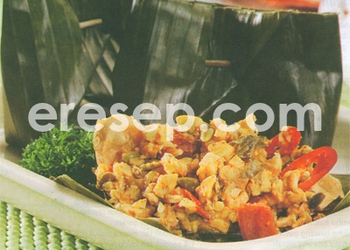
Pepes jamur telur asin
Untuk 6 bungkus Bahan : 200 gram jamur merang, dibelah dua 2 butir telur asin mentah 10 butir cabai rawit merah 50 ml santan kentan instan 4 lembar daun salam, dipotong 2 bagian 1 batang serai, diiris miring daun pisang untuk membungkus Bumbu halus : 6 butir ...
 
20-11-2008
kategori resep masakan : daging
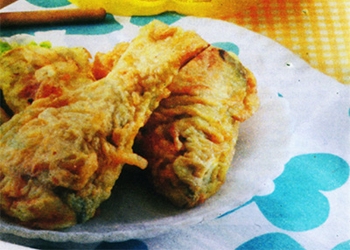
Pepes tahu dan daging
Untuk 12 bungkus Bahan : 1 buah (330 gram) tahu putih, dicincang kasar 100 gram daging giling 1 sendok teh Royco Sapi 2 butir telur 1 batang daun bawang, diiris halus 100 ml santan dari 1/4 butir kelapa 10 buah cabai rawit merah Bumbu halus : 3 siung bawang p...
 
19-11-2008
kategori resep masakan : cake
Cake kismis bersoda
Cake kismis bersoda
Untuk 14 potong Bahan: 200 gram margarin 100 gram gula palem 50 gram gula pasir 4 butir telur 300 gram tepung terigu protein sedang 20 gram susu bubuk 200 ml minuman bersoda manis (sprite) 100 gram kismis, dipotong-potong Cara membuat: 1. Kocok margarin, gul...
 
19-11-2008
kategori resep masakan : cake
Bolu kukus gulung pelangi
Untuk 12 potong Bahan: 200 gram putih telur 1/4 sendok teh garam 25 ml santan kental dari 1/4 kelapa 1 sendok teh emulsifier (SP/TBM) 100 gram gula pasir 80 gram tepung terigu protein rendah 25 gram minyak goreng 75 gram selai stroberi untuk olesan Cara membu...
 
26-10-2008
kategori resep masakan : ayam
Ayam masak bugis
Ayam masak bugis
Untuk 4 porsi Bahan: 1 ekor (650 gram) ayam kampung 6 butir bawang merah, diiris tipis 1.200 ml air kelapa 4 butir cengkeh 1 buah bunga pala 3 cm kayumanis 2 lembar daun salam 1/2 sendok teh asam jawa 1 1/4 sendok teh garam 1/2 sendok teh gula merah sisir 30
 
26-10-2008
kategori resep masakan : ayam
Ayam gagape
Ayam gagape
Untuk 8 porsi Bahan: 1 ekor ayam, dipotong 10 bagian 150 gram kelapa parut, disangrai, dihaluskan 2 lembar daun salam 3 batang serai, diambil putihnya, dimemarkan 2 sendok teh garam 2 3/4 sendok teh gula pasir 500 ml santan dari 1/2 butir kelapa 1/4 sendok teh air
 
17-10-2008
kategori resep masakan : ayam
Rendang ayam
Rendang ayam
Untuk 12 porsi Bahan: 1 ekor (1.350 gram) ayam kampung 6 lembar daun jeruk, dibuang tulangnya, disobek-sobek 2 lembar daun kunyit, dibuat simpul 3 batang serai, diambil putihnya, dimemarkan 1 buah asam kandis 1.500 ml santan encer (dari sisa perasan santan kental)
 
30-09-2008
kategori resep masakan : ayam
Soto Ayam
Soto Ayam
untuk : 6 porsi BAHAN : 1 ekor (800 g) ayam kampung 2 L air 10 lembar daun jeruk purut 2 lembar daun salam 2 batang serai, ambil bagian putihnya, memarkan 3 cm lengkuas, memarkan 3 sdm minyak untuk menumis Bumbu, haluskan : 10 butir bawang merah 5 siung bawan
 
20-11-2008
kategori resep masakan : daging
Pepes tahu dan daging
Untuk 12 bungkus Bahan : 1 buah (330 gram) tahu putih, dicincang kasar 100 gram daging giling 1 sendok teh Royco Sapi 2 butir telur 1 batang daun bawang, diiris halus 100 ml santan dari 1/4 butir kelapa 10 buah cabai rawit merah Bumbu halus : 3 siung bawang p
 
27-10-2008
kategori resep masakan : daging
Pa barobo
Pa barobo
Untuk 7 porsi Bahan: 300 gram daging tetelan, dipotong-pótong 2.000 ml air 200 gram nangka muda, dipotong-potong, direbus 5 lonjor kacang panjang, dipotong-potong 1/2 ikat (75 gram) kangkung, dipetiki 4 slung bawang putih, diiris tipis 8 butir bawang merah,
 
26-10-2008
kategori resep masakan : daging
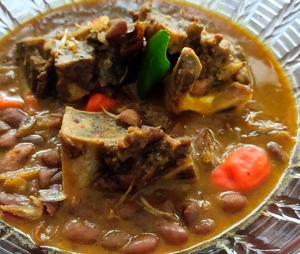
Rawon dendeng ragi
Rawon dendeng ragi
Untuk 6 porsi Bahan: 600 gram daging sengkel 2.000 ml air 1 sendok teh garam 1/4 sendok teh merica bubuk 2 lembar daun salam 3 batang serai, diambil putihnya, dimemarkan 5.1embar daun jeruk, dibuang tulangnya 1 batang daun bawang, dipotong 1 cm 1 1/2 sendok teh
 
26-10-2008
kategori resep masakan : daging
Coto makasar
Coto makasar
Untuk 6 porsi Bahan: 400 gram daging sandung lamur 100 gram hati sapi, direbus, dipotong-potong 100 gram babat, direbus, dipotong-potong 150 gram paru, direbus, dipotong-potong 100 gram lidah, direbus, dipotong-potong 2.000 ml air 4 cm kayumanis 2 batang serai
 
19-11-2008
kategori resep masakan : cake
Cake kismis bersoda
Cake kismis bersoda
Untuk 14 potong Bahan: 200 gram margarin 100 gram gula palem 50 gram gula pasir 4 butir telur 300 gram tepung terigu protein sedang 20 gram susu bubuk 200 ml minuman bersoda manis (sprite) 100 gram kismis, dipotong-potong Cara membuat: 1. Kocok margarin, gul
 
19-11-2008
kategori resep masakan : cake
Bolu kukus gulung pelangi
Untuk 12 potong Bahan: 200 gram putih telur 1/4 sendok teh garam 25 ml santan kental dari 1/4 kelapa 1 sendok teh emulsifier (SP/TBM) 100 gram gula pasir 80 gram tepung terigu protein rendah 25 gram minyak goreng 75 gram selai stroberi untuk olesan Cara membu
 
19-11-2008
kategori resep masakan : cake
Bolu kenari kayumanis
Untuk 6 buah Bahan: 3 butir telur 50 gram gula pasir 25 gram gula merah, disisir halus 1 sendok teh emulsifier (SP/TBM) 75 gram tepung terigu protein sedang 1 sendok teh kayumanis bubuk 25 ml air 25 gram margarin, dilelehkan 25 gram kenari, diiris panjang untuk t
 
19-11-2008
kategori resep masakan : cake
Bolu marmer tape
Bolu marmer tape
Untuk 16 potong Bahan: 180 gram margarin 100 gram gula pasir halus 100 gram tape singkong 3 kuning telur 200 gram tepung terigu protein sedang 100 ml santan dari 1/4 butir kelapa 3 putih telur 1/4 sendok teh garam 50 gram gula pasir 1 sendok teh cokelat bubuk d
 
27-10-2008
kategori resep masakan : seafood
Pallumara
Untuk 8 porsi Bahan: 2 ekor (900 gram) ikan bandeng, dipotong-potong 2 buah kluwek, diambil isinya, diseduh, dihaluskan 1 sendok makan asam jawa dan 3 sendok makan air, dilarutkan 3 lembar daun jeruk, dibuang tulangnya 2 1/2 sendok teh garam 1/4 sendok teh merica bu
 
22-10-2008
kategori resep masakan : seafood
Sambal goreng tengiri
Untuk 5 porsi Bahan: 400 gram tenggiri, potong-potong, digoreng asal berkulit 4 siung bawang putih, diiris tipis 6 butir bawang merah, diiris tipis 4 buah cabai merah besar, diiris halus, buang biji 1 batang serai, ambit putthnya, dimemarkan 2 lembar daun jeruk,
 
17-10-2008
kategori resep masakan : seafood
Rendang kerang cabal hijau
Untuk 5 porsi Bahan: 500 gram kerang darah, direbus, ditiriskan 50 gram lengkuas parut 1 buah pekak 3 butir cengkeh 3 cm kayumanis 2 batang serai, dimemarkan 1 lembar daun kunyit, dibuat simpul 2 buah asam kandis 1 sendok makan garam 1/2 sendok teh merica bu
 
02-10-2008
kategori resep masakan : seafood
Kering Teri Shanghai
BAHAN : Kacang Shanghai 200 gram Teri Medan 100 gram, goreng kering Cabai merah 5 buah, buang bijinya, iris serong tipis, goreng Daun jeruk 2 lembar, iris halus Lengkuas 2 cm, memarkan Daun salam 2 lembar Air asam jawa 3 sendok teh Gula merah sisir 3 sendok makan
 
16-11-2008
kategori resep masakan : minuman dan bubur
Wedhang ronde talas
Wedhang ronde talas
Untuk 8 porsi Bahan kulit: 100 gram tepung ketan putih 150 gram talas kukus, haluskan 1/4 sendok teh garam 2 1/2 sendok makan gula tepung 1 sendok makan tepung sagu 1/4 sendok teh air kapur sirih 75 ml santan hangat dari 1/4 butir kelapa 1/8 sendok teh pewarna
 
26-10-2008
kategori resep masakan : minuman dan bubur
Barobbo
Barobbo
Untuk 5 porsi Bahan bubur: 3 buah (900 gram) jagung manis, diparut 1 buah (250 gram) jagung manis, disisir halus 400 ml air 2 siung bawang putih, diiris tipis 3 butir bawang merah, diiris tipis 2 sendok teh garam 1/2 sendok teh merica bubuk 1/2 ikat (75 gram)
 
17-10-2008
kategori resep masakan : minuman dan bubur
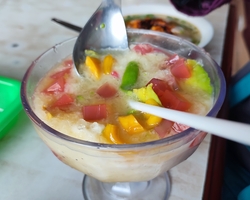
Es buah campur
Es buah campur
Bahan: 100 gram melon, dipotong bulat 100 gram semangka, dipotong bulat 150 gram stroberi, dibelah dua 150 gram nata de coco 100 gram pepaya, dipotong bulat 100 gram daging sirsak 1 buah (200 gram) pear, dipotong kotak 1 buah kelapa muda, dikeruk lebar 100 gram be
 
02-10-2008
kategori resep masakan : minuman dan bubur
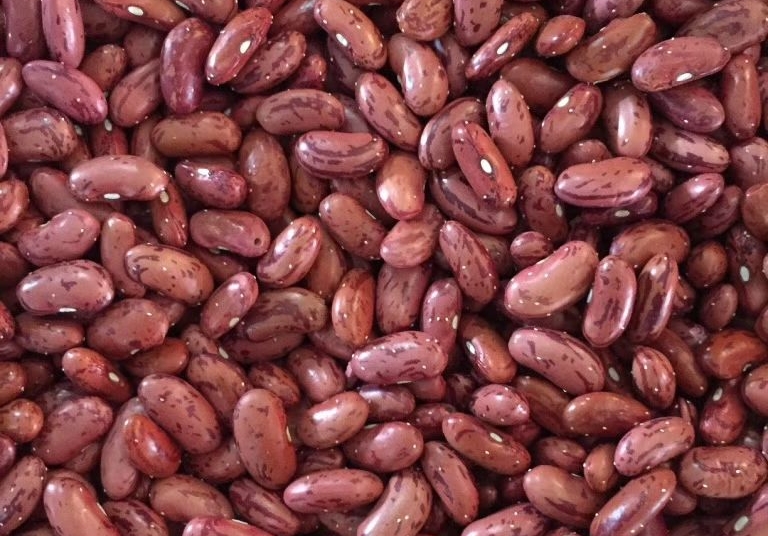
Es Kacang Merah
Es Kacang Merah
Untuk 10 gelas Bahan : 100 gram kacang merah kering, dicuci bersih 1.000 ml air 1 sendok makan cokelat bubuk 1 lembar daun pandan, disimpulkan 1/4 sendok teh garam 200 ml ABC Special Grade Gula Merah Cair 100 gram cincau hitam, dipotong kotak 100 gram nata de co
 
26-10-2008
kategori resep masakan : sayuran dan buah
Bakwan Kelapa
Bakwan Kelapa
untuk 15 buah Bahan: 200 gram kelapa parut kasar 1 butir telur 75 gram ten medan 1 batang daun bawang, diiris halus 1 tangkai seledri, diiris halus 75 gram tepung terigu protein sedang minyak untuk menggoreng Bumbu halus: 2 siung bawang putih 1 sendok teh ke
 
17-10-2008
kategori resep masakan : sayuran dan buah
Oseng-oseng kol ampela ayam
Untuk 4 porsi Bahan: 200 gram kol, diiris kasar 1 butir telur, dikocok lepas 5 buah ampela, direbus, diiris halus 2 siung bawang putih, diiris tipis 3 butir bawang merah, diiris tipis 1 buah cabai merah besar, diiris miring 2 buah cabai hijau besar, diiris miring
 
17-10-2008
kategori resep masakan : sayuran dan buah
Sup sawi kembang tahu
Untuk 5 porsi Bahan: 100 gram sawi asin, dipotong-potong 50 gram kembang tahu, direndam, dipotong kotak 2 batang daun bawang, ipotong 2 cm 1/2 buah bawang bombay, dipotong-potong 1.000 ml air kaldu ayam 1 sendok makan garam 1/4 sendok teh pala bubuk 1/2 sendok te
 
17-10-2008
kategori resep masakan : sayuran dan buah
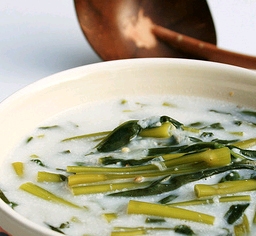
Bunga genjer tumis cumi telur
Untuk 4 porsi Bahan: 2 ikat (200 gram) bunga genjer, dipotong-potong 50 gram cumi telur, digoreng, dipotong-potong 1 ikat (200 gram) daun genjer, dipotong-potong 4 siung bawang putih, diiris tipis 6 butir bawang merah, diiris tipis 1 lembar daun salam 2 lembar dau
 
17-10-2008
kategori resep masakan : Sup
Sup ayam kuah lobak
Sup ayam kuah lobak
Untuk 4 porsi Bahan: 1/2 ekor ayam, dipotong 12 bagian 1 cm jahe, dimemarkan 1.500 ml air 150 gram lobak, diiris tipis 3 lembar daun jeruk, dibuang tulangnya 3 siung bawang putih, digoreng, dimemarkan 1 sendok makan kecap ikan 1 1/2 sendok teh garam 1/2 sendok
 
17-09-2008
kategori resep masakan : Sup
Sup bombay merica hitam
Untuk 5 porsi Bahan : 1/2 buah bawang bombay, diiris panjang 200 gram ayam fillet, diiris panjang 1 sendok teh merica hitam, ditumbuk kasar 1.500 ml air 100 gram jagung putren, diiris miring 50 gram kapri, disiangi 50 gram kacang polong 1 sendok makan kecap ikan
 
27-07-2008
kategori resep masakan : Sup
Sup sukiyaki gulung ala sechuan
Bahan: 100 gram daging sukiyaki 2 buah wortel, dipotong korek api 2 siung bawang putih, dicincang halus 1/2 buah bawang bombay, dicincang halus 1 cm jahe, dicincang halus 1.000 ml air 100 gram rebung kaleng, dipotong korek api 3 lembar jamur kuping, direndam, diiri